
Digital Signage Buying Guide
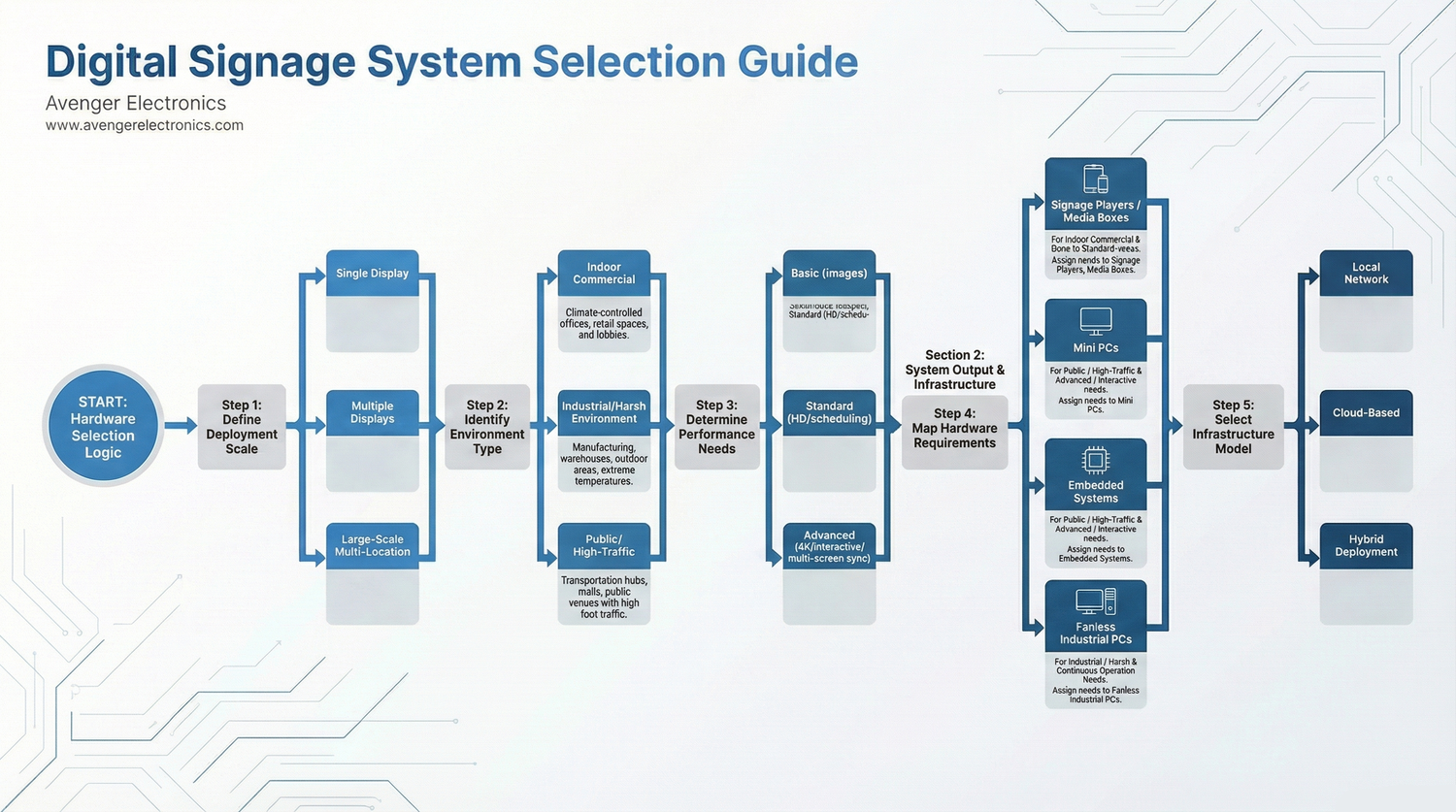
This digital signage buying guide explains how to select commercial signage hardware and signage computing systems for scalable deployments across commercial environments.
These systems operate within structured digital signage infrastructure designed for scalable deployment across retail, enterprise, and multi-location environments. This includes media player systems, compact computing platforms, and embedded industrial systems.
System selection should align with deployment architecture and long-term planning strategies to ensure performance, reliability, and consistency across distributed display networks, including commercial display infrastructure.
Explore digital signage systems →
Need Help Choosing a System?
Get guidance on selecting hardware, infrastructure, and deployment architecture for your environment.
Key Components to Consider
Media Players
Dedicated playback systems designed for continuous operation across signage environments.
Mini PC Platforms
Flexible computing systems used for signage, embedded deployments, and scalable infrastructure.
Commercial Displays
Display hardware designed for extended operation and consistent visual performance.
System Infrastructure
Network connectivity, management systems, and deployment architecture supporting distributed environments.
How to Choose the Right Hardware
Performance Requirements
Align system specifications with content type, resolution, and playback demands.
Deployment Environment
Select fanless or rugged systems for continuous operation in demanding conditions.
Form Factor
Choose embedded or compact systems based on installation constraints and integration needs.
Scalability
Ensure systems can expand across additional displays, locations, and infrastructure layers.
Not Sure What Hardware You Need?
Get help selecting signage players, computing systems, and deployment configurations aligned with your environment.
Deployment Considerations
Single Location Deployments
Simple systems with limited infrastructure and localized control.
Multi-Location Networks
Standardized hardware with centralized management and synchronized content delivery.
Kiosk Integration
Embedded computing systems supporting interactive and controlled-use environments.
Video Wall Systems
High-performance systems designed for synchronized multi-display environments.
Planning a Large Deployment?
Define your architecture, infrastructure, and hardware requirements before purchasing.
Reliability Factors
Hardware Standardization
Consistent hardware reduces maintenance complexity across deployments.
Pre-Configured Systems
Devices prepared before deployment improve efficiency and reduce setup time.
Continuous Operation
Systems designed for long-term use across distributed display infrastructure.
Centralized Management
Remote monitoring and control support efficient updates and system oversight.
Choosing the Right System Prevents Future Issues
Selecting the correct hardware and system architecture at the start supports long-term scalability, standardized infrastructure, and reliable performance across multi-location digital signage deployments.
Related Pages
- Digital signage systems overview
- Commercial signage hardware
- Deployment architecture
- Deployment environments
- Case studies
- Commercial signage infrastructure
Frequently Asked Questions
What is a digital signage media player?
A media player is a system responsible for rendering and delivering content to digital signage displays.
Do I need a mini PC or a signage player?
This depends on performance requirements, content complexity, and deployment environment.
What infrastructure is required?
Network connectivity and centralized management systems are required for scalable deployments.
Can systems scale?
Yes, properly designed systems allow expansion without major infrastructure changes.
What is the best hardware for digital signage?
The best hardware depends on deployment size, environment, and system requirements.
Get Help Choosing the Right System
Define your system requirements, evaluate hardware options, and plan scalable deployment infrastructure.