
Digital Signage System Architecture
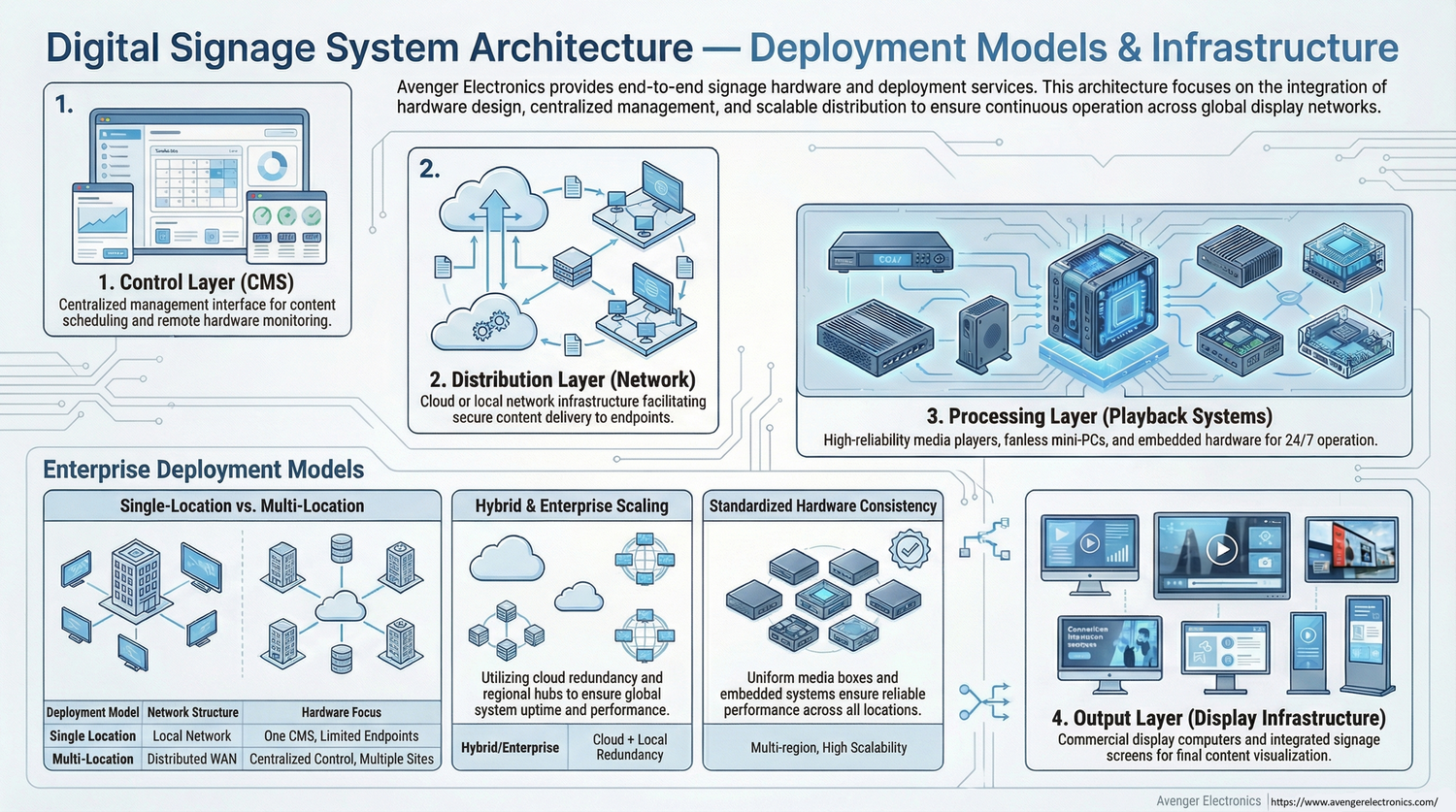
Digital signage system architecture defines how commercial display hardware and signage computing systems are structured within scalable digital signage infrastructure across commercial environments.
These systems combine media player systems, compact computing platforms, and network infrastructure to support consistent performance, centralized control, and multi-location deployment.
Well-defined architecture ensures systems operate reliably across distributed environments, supporting standardized hardware configurations and long-term operational consistency across commercial digital signage infrastructure.
Define your system architecture →
Designing a Signage System?
Define your infrastructure, hardware selection, and deployment architecture before rollout.
Core Components of a Signage System
Display Hardware
Commercial display systems used across deployment environments.
Media Player Systems
Playback devices responsible for content delivery and system control.
Compute Platforms
Mini PCs and embedded systems used for advanced deployment scenarios.
Network Infrastructure
Connectivity enabling centralized management across distributed systems.
How Digital Signage Systems Work
Content Creation
Content is prepared for distribution across displays.
Content Distribution
Content is delivered through centralized infrastructure to all devices.
Playback Execution
Systems render and display content across deployment environments.
System Monitoring
Performance and uptime are monitored.